What Kite Size for What Wind? A Practical Chart in Knots
Kite size is the most common beginner mistake in both directions: too big and you get dragged, too small and you cannot get up. Use the chart as a starting point, then adjust for your gear and the day.
The quick chart (twintip, about 75 kg rider)
These are rough numbers. They assume a modern 10–14 m freeride kite, a twintip board of normal size and a rider who can already stay upwind. Lighter riders go down a size; heavier riders go up.
| Wind | Typical kite | Feels like |
|---|---|---|
| 10–14 kn | 14–17 m | Marginal. Big kite, big board, light-wind specialists only. |
| 14–18 kn | 11–13 m | The usual "good day" for a 12. |
| 18–23 kn | 9–11 m | Powered and fun. A 9 or 10 for most riders. |
| 23–28 kn | 7–9 m | Strong. Small kites, short lines on the bar. |
| 28+ kn | 5–7 m | Experienced riders only. Check gust spread first. |
Adjusting for weight
A rule of thumb is about one metre of kite per 10 kg of difference. A 60 kg rider usually goes one to two sizes smaller than the chart. A 95 kg rider goes one to two sizes bigger. Foil riders can go several sizes smaller than the chart, since a foil needs far less pull to stay up.
Read the gusts, not just the average
The number on a forecast is an average. If the gusts are 10 kn above the average, the day feels much more violent than the average suggests and a smaller kite is the safer pick. A steady 20 kn is easier than a 14–26 kn day, which can feel like 14 and 26 in the space of a minute.
Go smaller when
- The wind is offshore or the spot has a tricky shoreline.
- You are the only person on the water, or nobody is watching.
- The forecast shows rising wind, as it does on thermal days in the afternoon.
- Your gear is new to you or you have not ridden for a while.
How to use this on our spots
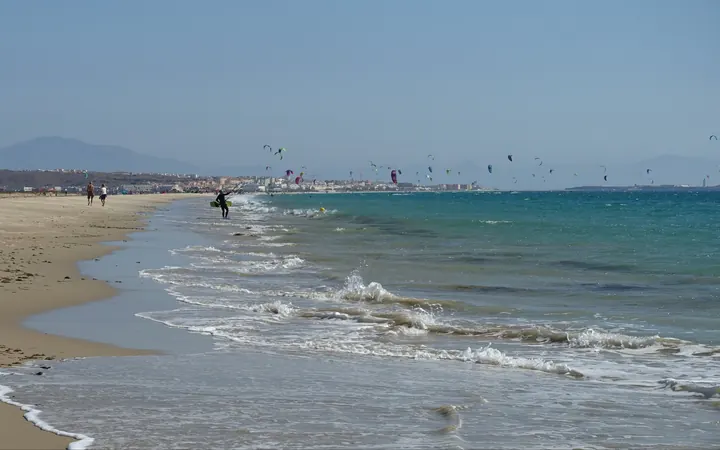
Every spot page on Kite99 lists a typical wind range in knots, and the forecast tables show five models side by side. Compare the numbers there with the chart. In Tarifa on a Levante day you are in the 9 m zone, while Sestroretsk and Anapa often need a 12.
Spots mentioned
Conditions, rules and access change. Always check on the beach, ask local schools and ride within your level.